
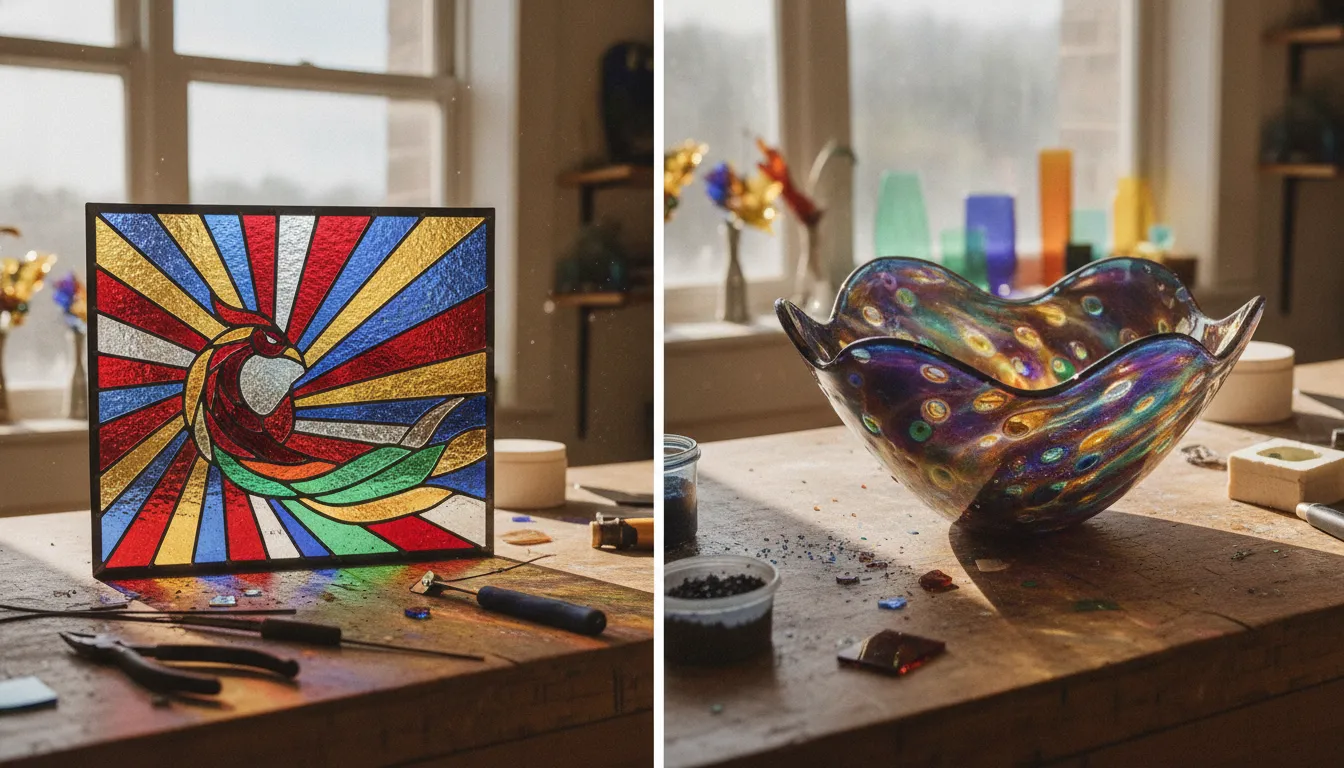
The choice between stained glass and fused glass changes everything from your startup costs to your creative process. Stained glass relies on precise cutting and metal joins to build light-catching windows and panels. Fused glass uses high heat to bond glass layers into smooth art pieces that can take three-dimensional forms.
Stained glass vs fused glass differ primarily in the method used to join individual glass pieces together. Stained glass artists use copper foil or lead came to secure glass shapes with solder, creating flat panels. Fused glass involves stacking compatible pieces and heating them in a kiln until they melt into a single piece. Stained glass remains flat while fused glass can be shaped into three-dimensional bowls or sculptures. Stained glass has a lower entry cost for tools. Fused glass requires a specialized kiln and COE-matched glass to prevent cracking.
Start with the right supplies. Shop stained glass starter kits or explore glass kilns to begin your first project today.
Both methods offer unique ways to express your creativity and build beautiful glass projects. Understanding the basic mechanics of each craft will help you choose the right tools and materials for your goals. This guide breaks down every key difference to help you decide which path fits your budget, workspace, and artistic vision.
What Is Stained Glass?
Stained glass is a classic art form that uses colored glass to create windows, door panels, and decorative art pieces. Artists cut stained glass sheets into precise shapes and fit them together like a puzzle. The color in stained glass is integral to the material itself, created by adding minerals to molten glass during manufacturing, as documented by the Corning Museum of Glass.
Stained glass is a cold-glass craft where artists cut colored sheets into shapes and join them using lead came or copper foil with solder. The metal framework creates the characteristic dark lines that define the design. Stained glass produces flat panels that shine when light passes through them. It is ideal for windows, suncatchers, and framed art.
How Parts Join Together
To hold the glass shapes in place, artists use a metal framework. The two most common joining methods are lead came and copper foil. In the lead came method, you slide glass edges into H-shaped strips of soft lead and solder the joints. The copper foil method involves wrapping each piece’s edges in adhesive copper tape before melting solder along every seam. These metal lines define the visual character of stained glass work, providing both structural strength and distinctive outlines.
Types of Stained Glass
The variety of stained glass styles allows for broad creative expression. Clear glass transmits light cleanly, making it ideal for sun-facing windows. Opal glass has a milky, translucent quality often used in lamps and small art pieces. Textured glasses with ripples or seed-like bubbles scatter light in unique patterns. Top brands including Bullseye, Wissmach, and Oceanside produce high-quality sheets in hundreds of colors. Because this glass is designed for cold assembly rather than kiln firing, it typically lacks a standardized coefficient of expansion rating.
Common Uses and Projects
Stained glass is best known for large architectural windows in churches and historic buildings, but modern artists create many home-scale projects too. Panels, suncatchers, frames, and decorative boxes are popular starter projects for those using stained glass starter kits. Finished pieces are typically flat panels designed to hang where light passes through them, adding color and privacy to any room.
What Is Fused Glass?
Fused glass is a form of art glass created by melting compatible glass pieces together in a kiln. Unlike stained glass which uses metal to connect pieces, fused glass relies on high heat to bond layers into a single, solid object with no visible seams. Artists stack multiple colors and shapes to create intricate designs that fuse into one uniform piece with a glossy, smooth finish.
Fused glass is a heat-based craft where artists stack compatible glass layers and fire them in a kiln at 1400-1500 degrees Fahrenheit. The heat bonds the layers into a single seamless piece. Fused glass can be shaped into three-dimensional forms like bowls and plates through a secondary slumping process. It requires COE-matched glass to prevent thermal shock and cracking.
The Fusing Process
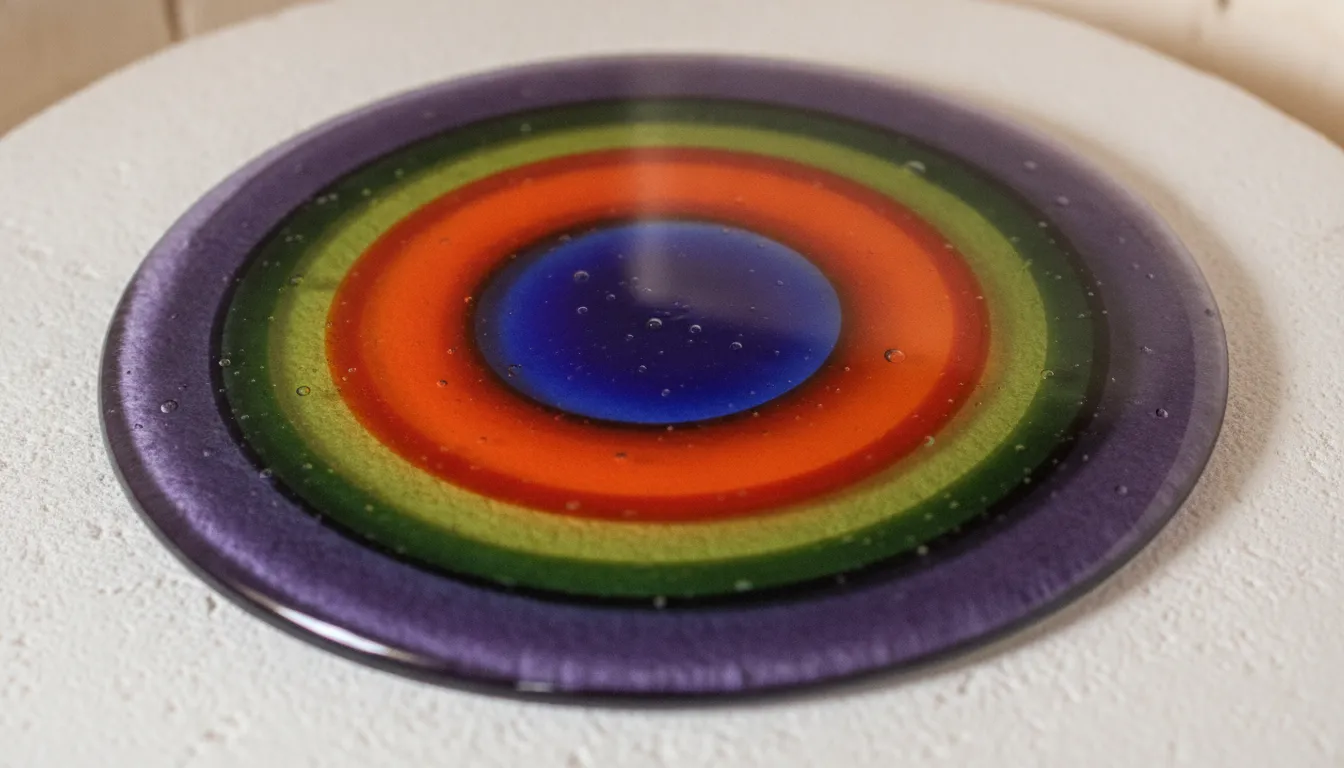
Glass fusing occurs at very high temperatures, typically between 1400 and 1500 degrees Fahrenheit. The process begins by stacking compatible glass on a kiln shelf coated with kiln wash or fiber paper. As the temperature rises, the glass softens and flows together. Fusing involves melting layers of glass in a kiln where they bond together to form a single piece.
Different levels of fusing produce different results. A tack fuse leaves individual pieces with visible texture, while a full fuse melts everything into a flat, uniform sheet. Quality glass kilns from Skutt and Olympic give artists precise control over firing schedules.
Understanding COE and Compatibility
For glass to fuse safely, all pieces in a project must share the same Coefficient of Expansion (COE). This number measures how much glass expands when heated and contracts as it cools. Mixing different COE ratings causes thermal stress that cracks the piece during cooling. Most fusing artists use COE90 glass from Bullseye or COE96 glass from Oceanside. These products are tested and labeled to ensure consistent behavior in the kiln. Always keep fusible glass separate from non-fusible stained glass to avoid accidental mixing.
Stained Glass vs Fused Glass: Key Differences
The fundamental difference between stained glass and fused glass comes down to how pieces are joined. Stained glass uses copper foil or lead came with solder to create a metal framework. Fused glass uses high kiln heat to melt layers into a single seamless piece. This distinction affects everything from the tools you need to the types of projects you can create.
Stained glass uses metal joins (solder, came) for cold assembly, producing flat panels with visible lead lines. Fused glass uses kiln heat to melt compatible glass into seamless pieces that can be shaped into 3D forms. Stained glass has lower startup costs but higher labor per project. Fused glass requires a larger kiln investment but allows faster project completion once the equipment is set up.
Joining Methods and Finished Looks
Stained glass artists use lead came or copper foil with tin-lead solder to create a raised metal grid that holds the design together. This metal framework is both functional and aesthetic, defining the lines of the artwork. Fused glass has no metal lines. Instead, you stack COE90 glass or COE96 glass in a kiln, and the heat melts the edges together for a smooth, seamless finish. This method permits layering effects that solder cannot replicate.
From Flat Panels to Three-Dimensional Art
Stained glass is primarily two-dimensional. It excels at flat windows and wall panels where light transmission is the goal. Fused glass offers greater dimensional freedom. Artists use slumping molds to transform a flat fused disc into a bowl, plate, or vase during a second firing. While some 3D stained glass pieces like lampshades are possible, fused glass is the superior choice for thick, solid sculptural forms.
Cost and Labor Comparison
Starting with stained glass costs less because you only need a soldering iron, glass cutter, and grinder. Fused glass has a higher entry price. A small Skutt kiln like the FireBox 8 starts at $1,220. But fusing often requires less hands-on labor once the kiln is programmed. Stained glass demands steady hands for hours of foiling and soldering work. The table below summarizes these differences at a glance.
| Feature | Stained Glass | Fused Glass |
|---|---|---|
| Joining Method | Lead came or copper foil with solder | Kiln heat at 1400-1500 degrees Fahrenheit |
| Surface Finish | Raised metal grid lines | Smooth and seamless |
| Standard Shape | Flat two-dimensional panels | Two-dimensional or three-dimensional forms |
| Glass Compatibility | Non-standardized COE | Tested COE90 or COE96 required |
| Startup Cost | Lower , soldering iron, cutter, grinder | Higher , kiln required from $1,220 |
| Labor per Project | High , manual foiling and soldering | Lower , kiln does most of the work |
You must keep stained glass and fusible glass separate in your studio. Placing stained glass in a kiln almost always leads to thermal shock and cracking. According to the Mayo Clinic, art therapy including glass work can help reduce stress. But a cracked project in the kiln will do the opposite. Always verify glass is tested for compatibility before firing.
Ready to choose your craft? Browse stained glass starter kits or compare Skutt kiln models to get started.
Can You Use Stained Glass for Fusing?
This is the most common question beginners ask, and the answer directly affects your success. Stained glass and fusible glass are not interchangeable, even when they come from the same manufacturer.
You cannot safely use stained glass for fusing. Stained glass lacks a standardized Coefficient of Expansion (COE) rating. When heated in a kiln, unmatched expansion rates cause thermal shock, cracking, and project failure. Only use glass labeled as COE90 or COE96 for kiln work.
The COE Factor
COE stands for Coefficient of Expansion. It measures how much glass expands when heated and shrinks when cooled. In a kiln, every piece in the project must expand and contract at the same rate. If one part moves faster than another, the piece cracks or shatters from thermal stress. Manufacturers of fusible glass test every batch and label it with a specific COE value.
The two most common standards are COE90 from Bullseye Glass and COE96 from Oceanside Glass. Stained glass does not carry a standardized COE rating because manufacturers produce it for cold assembly, not kiln firing. Its expansion rate is unknown and unlikely to match any other piece.
Why Mixing Types Fails
When you heat non-fusible stained glass in a kiln, uneven expansion creates internal stress. As the glass cools, different parts contract at different speeds, producing thermal shock. Cracks may appear immediately or develop hours after firing.
Even if stained glass survives one firing, the piece is structurally compromised and may crack during grinding, handling, or slumping. Fusible glass undergoes a controlled annealing process during manufacturing to relieve internal stress. Stained glass does not receive this treatment. Some experienced artists test small stained glass pieces in trial firings, but this requires knowing the exact manufacturer and production run. For beginners, the risk is not worth taking.
Smart Studio Habits
Store your stained glass and fusible glass separately with clearly labeled shelves and bins. Create a physical reference guide with small sample pieces glued to a board and their COE values written next to each one. When purchasing new glass, always check the label before adding it to your stash. Many artists enjoy both crafts by keeping the two materials strictly separated. Stained glass sheets and COE90 fusible glass each have their place, but they do not share a kiln.
Tools and Equipment You Will Need
Choosing the right tools is the first step in your glass art journey. Both crafts share basic cutting tools, but the rest of the equipment is quite different. Stained glass uses hand tools and a soldering iron. Fused glass requires the steady, controlled heat of a kiln. Understanding these needs helps you set up a safe and efficient workspace.
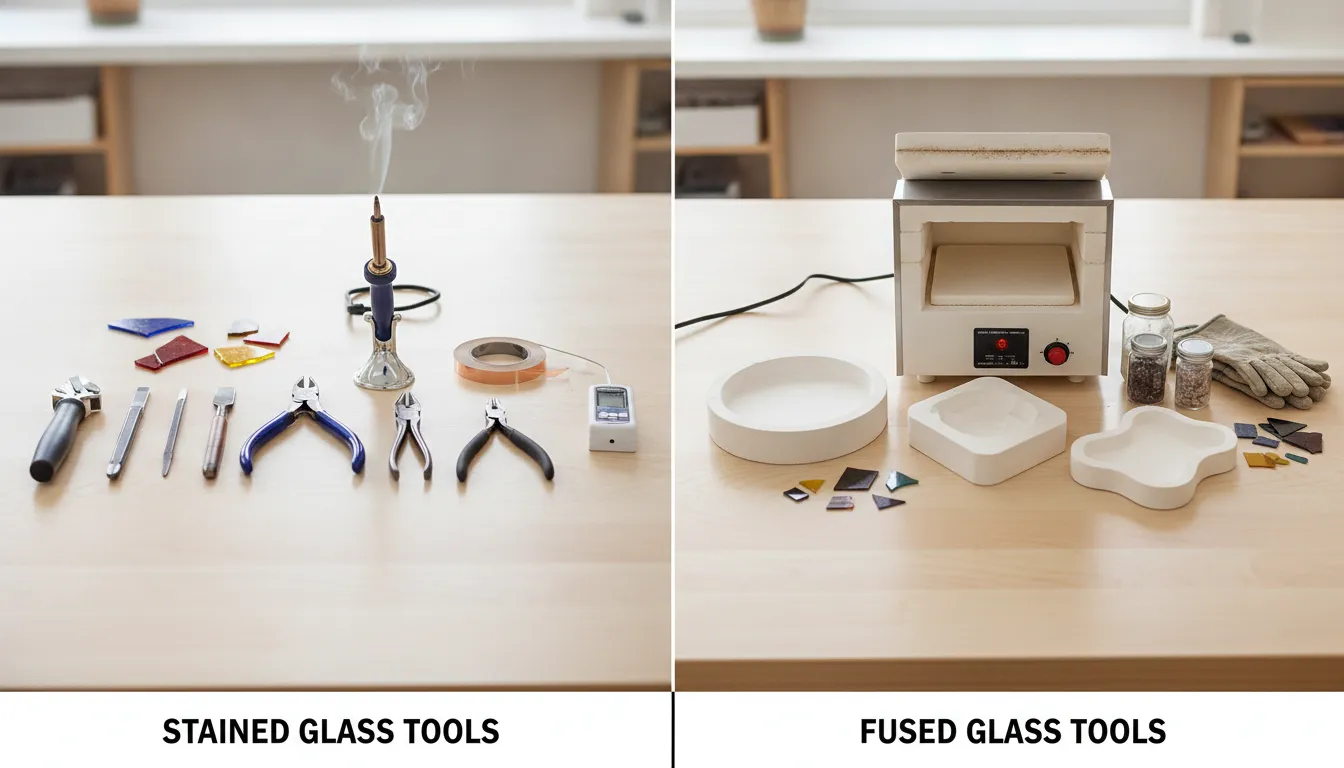
Stained glass requires a glass cutter, pliers, soldering iron, grinder, and ventilation for lead safety. Fused glass requires a glass kiln, kiln wash or fiber paper, and slumping molds for 3D work. Both crafts need safety glasses and a flat work surface. Stained glass tools cost less upfront. Fused glass requires the larger kiln investment.
Essential Stained Glass Tools
To begin stained glass, you need a quality glass cutter and running pliers to score and break sheets. A soldering iron is essential for joining pieces wrapped in copper foil or seated in lead came. A glass grinder smooths sharp edges so foil adheres properly. These items are available in stained glass starter kits designed for new artists. Safety is paramount when handling lead and sharp glass. Always wear safety glasses and work in a well-ventilated area to avoid inhaling solder fumes. The Occupational Safety and Health Administration (OSHA) emphasizes proper ventilation and hand hygiene when working with lead.
Fused Glass Equipment and Kilns
Fused glass requires a specialized kiln that reaches temperatures over 1400 degrees Fahrenheit. Unlike a kitchen oven, glass kilns provide precise temperature control essential for successful fusing. You also need kiln wash or fiber paper to prevent glass from sticking to the kiln shelf. Many artists use glass slumping molds to create bowls and plates during a second firing. Small kilns like the Skutt FireBox 8 start at $1,220. Larger studio models from Olympic can cost up to $5,985. Higher-end kilns feature digital controllers that manage annealing cycles automatically, ensuring glass cools slowly to prevent cracking.
Your Beginner Equipment Checklist
If you are ready to set up your studio, this checklist covers the core items for a safe and productive workspace in either craft.
- Choose your heat source. Buy a quality soldering iron for stained glass or a glass kiln for fusing work.
- Get basic cutting tools. Pick a glass cutter and running pliers to score and break pieces cleanly.
- Set up a flat work surface. Use a heat-proof mat for soldering or a sturdy table capable of supporting a heavy kiln.
- Buy glass that works for your craft. Choose stained glass sheets for panels or COE-tested glass for all kiln projects.
- Invest in safety gear. Keep safety glasses, heat-proof gloves, and a first-aid kit accessible at all times.
Get your studio set up fast. Shop glass kilns and fusing supplies with next-day shipping from Art Glass Supplies.
Which Craft Is Right for You?
Choosing between stained glass and fused glass depends on your goals, workspace, and budget. Both crafts let you create stunning art, but the way you work differs significantly. Stained glass suits those who enjoy meticulous handwork with tools. Fused glass appeals to artists who want to create three-dimensional pieces using heat rather than manual assembly.
Choose stained glass if you enjoy detailed handwork, have a limited budget, and want to create flat window panels and suncatchers. Choose fused glass if you want to make 3D pieces like bowls and plates, have space and budget for a kiln, and prefer letting heat do the work. Many artists eventually practice both crafts in separate areas of their studio.
Cost and Space Considerations
Budget is a significant factor when starting a new craft. Stained glass has a lower entry cost because it does not require a kiln. You can begin with a soldering iron, glass cutter, and grinder. A stained glass starter kit costs substantially less than a kiln. You also need a workspace with good airflow to handle solder fumes.
Fused glass requires a larger upfront investment for the kiln. A small starter model like the Skutt FireBox 8 costs $1,220, and you need a dedicated electrical circuit and fire-safe surface. However, fusing is often faster once the kiln is set up because the kiln does the bonding work automatically.
Project Goals and Style
Think about what you want to create. Stained glass is best for flat panels, suncatchers, and windows that hang in front of natural light. The metal lines defining each piece are part of the visual appeal. This craft demands patience because every edge must be foiled or leaded by hand. Fused glass provides more freedom to layer colors and create depth. Since the kiln melts glass at 1400 degrees, no lead lines are needed to join pieces. This method produces smooth finishes and allows three-dimensional forms. You must use tested glass such as COE96 glass to prevent cracking.
Can You Do Both?
You do not have to choose just one craft. Many artists practice both stained glass and fused glass in their studios. You can fuse small decorative elements in a kiln and incorporate them into a larger stained glass panel. Whether you start with a starter kit or a kiln, both crafts offer years of creative growth. Explore the full range of tools and materials at Art Glass Supplies to find everything you need for your next project.
Talk to our team for personalized guidance. Contact Art Glass Supplies for help choosing the right starter equipment for your goals.
Frequently Asked Questions
Which is more expensive: stained glass or fused glass?
Fused glass has a higher initial cost because you must buy a kiln. A starter model like the Skutt FireBox 8 costs $1,220. Stained glass setup is cheaper but requires more hands-on labor per project. Long-term costs depend on the type and quantity of glass you use for each piece. Both crafts offer entry-level options that fit different budgets.
Can I use stained glass for fusing?
Standard stained glass should not be used in a kiln. Most stained glass lacks a specific coefficient of expansion rating. If you mix pieces with different expansion rates, the glass will crack as it cools. According to Lisa J Vogt, using non-fusible glass leads to project failure. Stick with COE90 or COE96 glass to ensure your art remains intact.
What are common problems in fused glass art?
Common fusing issues include devitrification, thermal shock, and trapped air bubbles. Devitrification creates a cloudy, rough surface on the glass during firing. Using clean glass and proper kiln schedules helps prevent it. Air bubbles form when the temperature rises too quickly. Using tested fusible glass from COE90 or COE96 lines prevents most project failures before they start.
Is fused glass easier than stained glass for beginners?
Both crafts are accessible to beginners, but they require different skill sets. Stained glass focuses on precise cutting and manual soldering. Fused glass relies on layering glass and programming the kiln correctly. Many beginners find fusing easier because it allows more freedom with shapes and requires less fine motor precision. If you want to create three-dimensional pieces like bowls and plates, fused glass is the more straightforward path.
What is the best glass for beginners to buy?
Beginners should start with pre-cut glass shapes or small sheets from trusted brands. For stained glass, Bullseye and Wissmach sheets offer consistent quality for practice panels. For fusing, start with Bullseye COE90 or Oceanside COE96 glass, both available at Art Glass Supplies. Pre-cut fusible shapes eliminate the need for cutting in early projects, letting you focus on learning firing schedules.
Do I need ventilation for fused glass?
Yes. While fused glass does not produce lead fumes like soldering, firing glass can release binders from shelf paper and kiln wash. Always operate your kiln in a well-ventilated area or use a dedicated kiln vent system. Some glass colors contain metal oxides that release compounds during firing, making proper ventilation essential for safety.
Ready to Start Your Stained Glass vs Fused Glass Journey?
Every day you wait is a day without the joy of creating glass art in your own studio. You do not want your new tools sitting in a shopping cart while you stay stuck between two great choices. Art Glass Supplies offers next-day shipping so you can set up your workspace and start creating by this weekend. Picking the right starter equipment now saves you from months of indecision and slow progress.
Call 888-213-8588 to speak with our glass experts or request a consultation online. We will help you choose the perfect starter kit or kiln for your goals.